
 Image 1 of 3
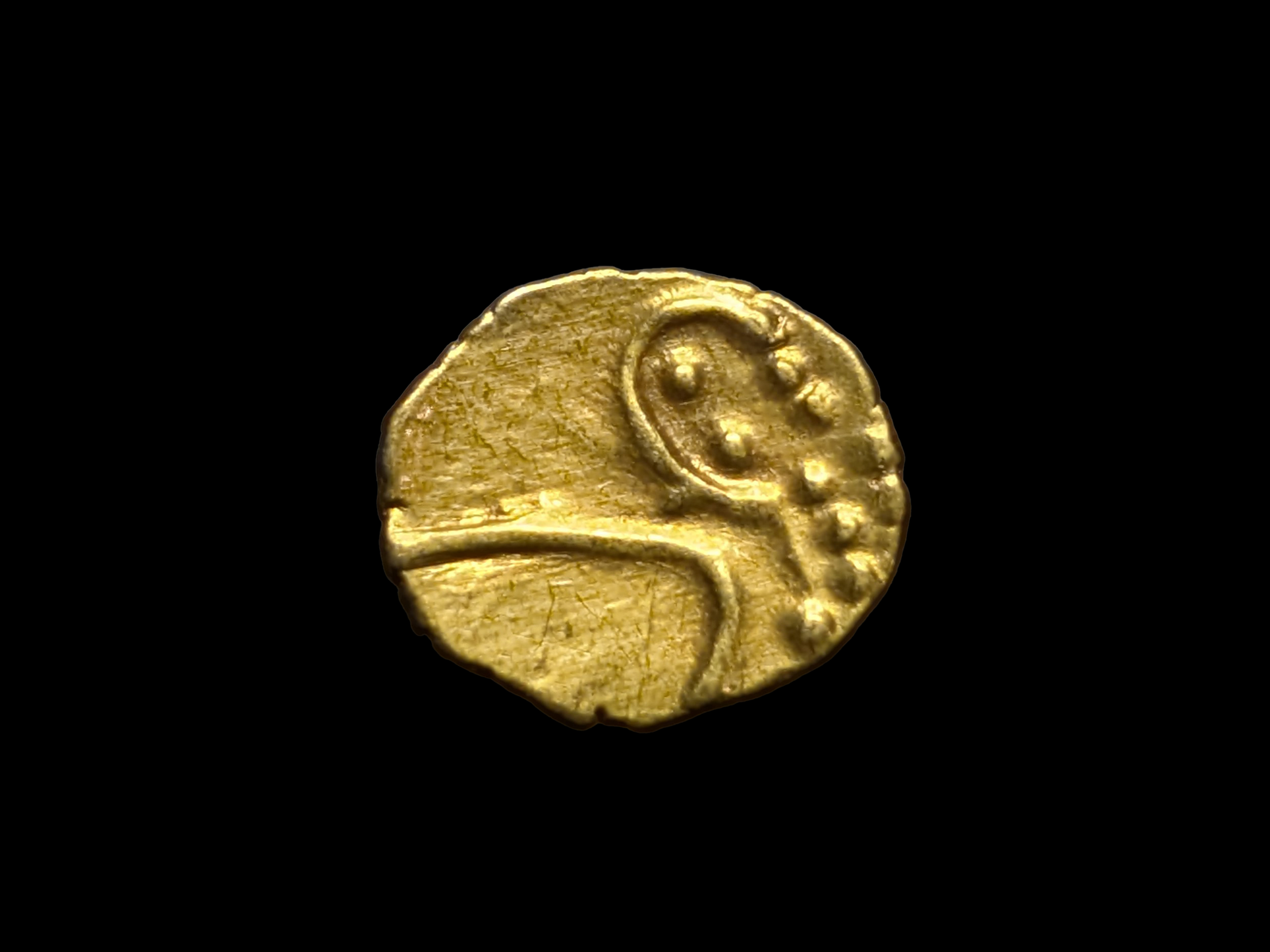 Image 2 of 3
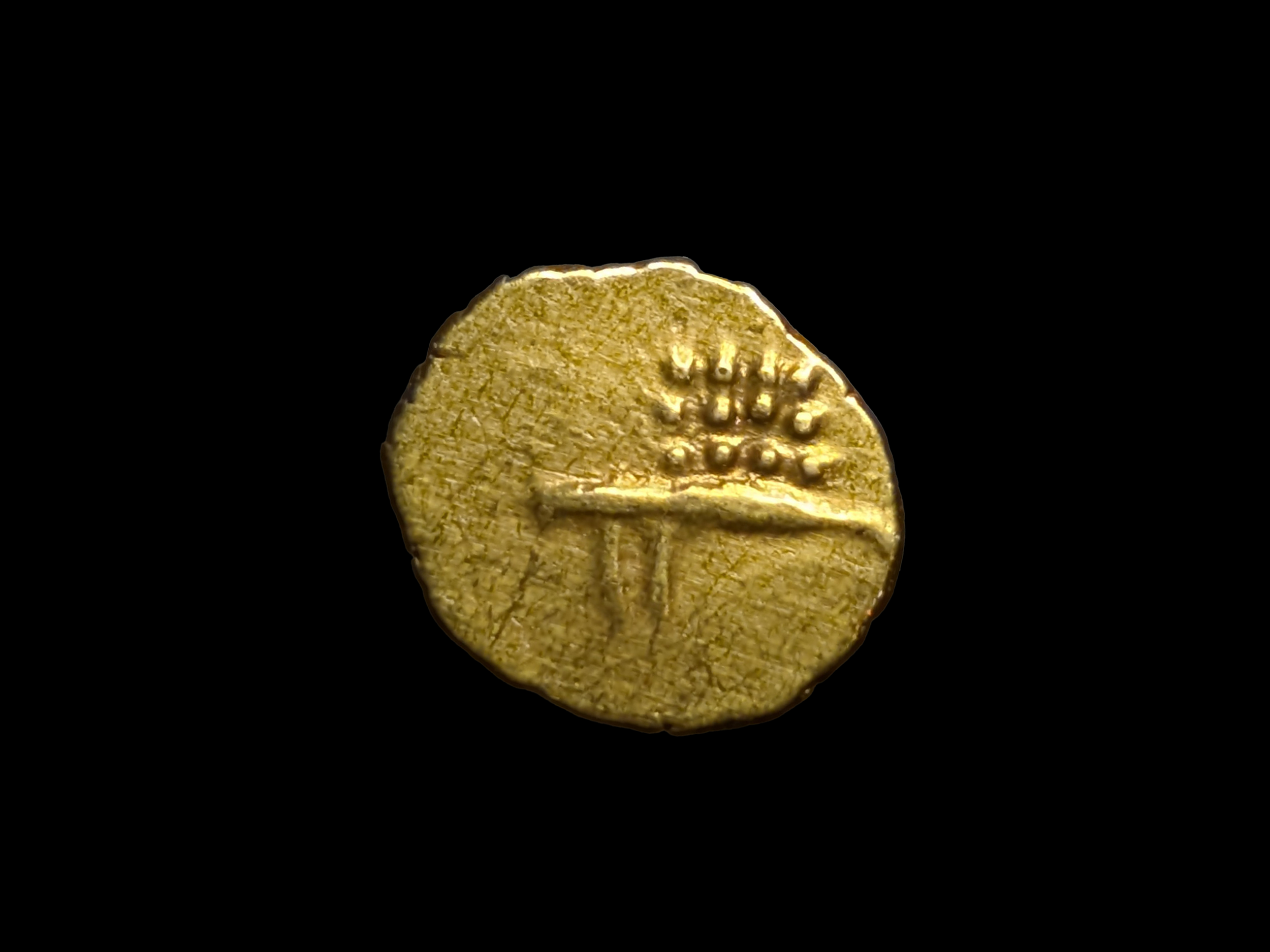 Image 3 of 3
INDIA. DUTCH COCHIN.
Gold Fanam, Circa 1663-1724.
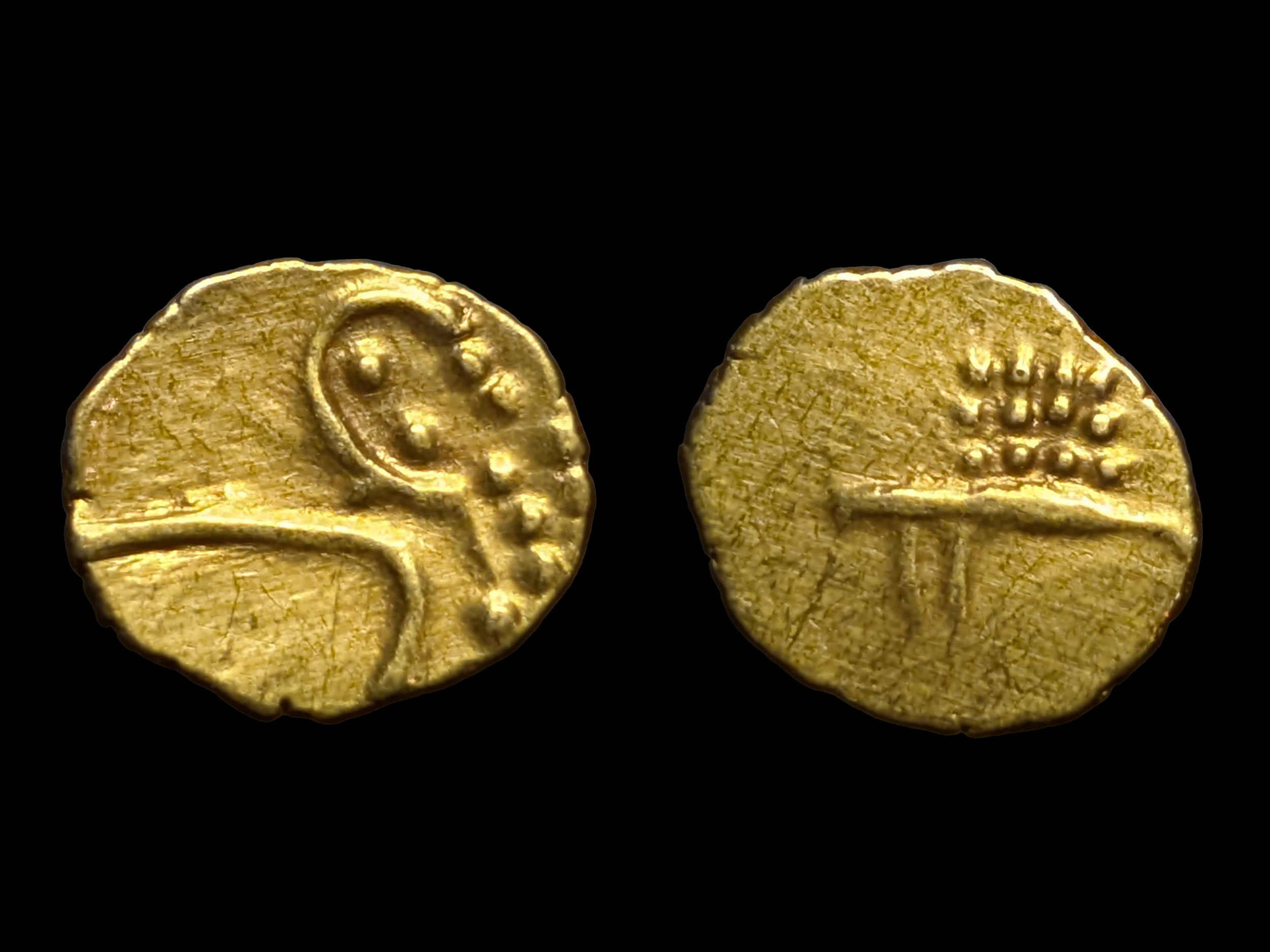
This gold fanam, struck in Cochin, is also known as a Rasi, a term used for gold fanams minted along the Malabar Coast. The Dutch East India Company (VOC), which operated a mint in Cochin, often depicted Hindu deities such as Kali on their coins. These images were not chosen for religious reasons, but rather as a practical strategy. By imitating local coinage, VOC coins were more easily accepted in regional markets. The deities held no spiritual significance for the Dutch; their use was entirely pragmatic, aimed at facilitating trade and integration into the local economy.
Circa 1663-1724. Obv: Human figure resembling Kali. Rev: Horizontal J with 12 dots over three lines.
Weight: 0.40g.
Diameter: 8mm.
Composition: Gold.
INDIA. DUTCH COCHIN.
Gold Fanam, Circa 1663-1724.
This gold fanam, struck in Cochin, is also known as a Rasi, a term used for gold fanams minted along the Malabar Coast. The Dutch East India Company (VOC), which operated a mint in Cochin, often depicted Hindu deities such as Kali on their coins. These images were not chosen for religious reasons, but rather as a practical strategy. By imitating local coinage, VOC coins were more easily accepted in regional markets. The deities held no spiritual significance for the Dutch; their use was entirely pragmatic, aimed at facilitating trade and integration into the local economy.
Circa 1663-1724. Obv: Human figure resembling Kali. Rev: Horizontal J with 12 dots over three lines.
Weight: 0.40g.
Diameter: 8mm.
Composition: Gold.